Pre-Winter Lawn Preparation on Hartford CT Clay Soils
Hartford lawns face a specific challenge that homeowners in other parts of Connecticut don't deal with as intensely: heavy clay soil. Clay holds moisture, compacts under foot traffic and freeze-thaw cycles, and makes spring recovery significantly harder when fall preparation is skipped or done incorrectly. Getting your lawn ready before the ground freezes isn't just about aesthetics — it's about protecting your investment through four months of cold, salt exposure, and ice. The steps you take in October and early November will directly determine how your grass looks when it comes out of dormancy in April.
Why Hartford Clay Soils Demand a Different Approach
Clay soils are common throughout the greater Hartford area, from West Hartford to Wethersfield and into the North End neighborhoods. These soils have tiny, tightly packed particles that limit drainage and restrict root movement. When clay gets wet and then freezes, it expands and contracts in ways that stress shallow root systems. During a typical Hartford winter with multiple freeze-thaw cycles, compacted clay can heave turf sections, damage root anchoring, and create low spots that collect standing water in spring.
Understanding this means your fall prep needs to go deeper than just raking leaves and doing a final mow. You need to actively improve soil structure before the ground locks up for winter. Skipping this step on clay means you're starting every spring already behind.
Core Aeration Is the Most Important Step
On clay soils in Hartford, core aeration in late September or early October is the single highest-value task you can perform. Aeration removes small plugs of soil — typically two to three inches deep — and creates channels that allow oxygen, water, and fertilizer to reach the root zone rather than sitting on the surface or running off.
The timing matters. You want to aerate while the grass is still actively growing, so the holes can begin closing before dormancy sets in. Aerating too late — after mid-October — gives the lawn less recovery time, and the open cores can allow frost to penetrate more deeply than you'd want. Aim for the window when overnight temperatures are consistently in the 40s but daytime temps still reach the 60s.
After aerating, leave the plugs on the surface. They will break down with rain and foot traffic and actually help top-dress the lawn naturally. If your lawn has severe compaction issues, overseeding immediately after aeration is the most effective time to introduce new grass seed — the open cores provide ideal seed-to-soil contact for germination.
Late-Season Fertilization on Hartford Turf
Late fall fertilization — often called a "winterizer" application — is specifically formulated for the transition into dormancy. Look for a fertilizer with a higher potassium ratio, which supports root hardening and helps grass tolerate the cold stress that Hartford winters bring. This is different from the nitrogen-heavy feeds you use in spring. Too much nitrogen in October pushes leaf growth right as the plant should be slowing down, leaving soft top growth vulnerable to early frost damage.
Apply winterizer fertilizer between late October and mid-November, depending on when your turf is slowing its visible growth. The grass blades may look dormant, but root activity continues until the ground freezes hard. That's the window where potassium uptake still occurs and does the most good. For Fall Cleanup that includes fertilization as part of a complete service, a professional can time the application correctly relative to your specific lawn conditions.
The Final Mow and Why Height Matters
Your last mow of the season should bring grass to approximately two and a half to three inches. This is a middle ground that matters for two specific reasons. If you leave grass too tall — above four inches — it creates a mat that traps moisture and promotes snow mold, a fungal disease that becomes visible in Hartford lawns every spring as gray or pink circular patches. If you cut too short — below two inches — you expose crown tissue to frost damage and reduce the lawn's ability to photosynthesize during mild late-fall days.
Don't make your final low cut in one pass if your grass has grown long. Step the height down over two or three mows in late October. Removing more than one-third of the blade in a single pass stresses the plant at exactly the time you want it conserving energy for root reserves.
Salt Barrier Prep Along Driveways and Sidewalks
One of the most overlooked aspects of pre-winter lawn preparation in Hartford is protecting the turf strips adjacent to driveways, sidewalks, and curbs. Road salt and driveway deicers are a real threat to grass health in Connecticut winters. Sodium chloride — the most common deicer — pulls moisture out of soil and disrupts the ion balance that grass roots need to function. After heavy use, salt-adjacent turf often shows up in spring looking brown, thin, and struggling even before other stressors have had any impact.
Before the first freeze, apply a thin layer of coarse sand or fine gravel along the edges most exposed to salt spray. Some lawn care professionals in the Hartford area also use a late-season application of gypsum — calcium sulfate — along these margins. Gypsum helps displace sodium ions in clay soil and can reduce the damage that accumulates over a full winter of deicing activity.
Leaf Management Before the Ground Freezes
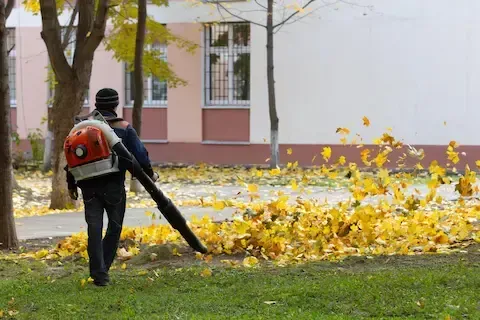
Hartford's tree canopy — oaks, maples, and elms throughout neighborhoods like Asylum Hill and Blue Hills — means significant leaf fall every October. Leaves left matted on turf over winter block light, trap moisture, and create conditions where turf diseases develop under snow cover. Mulching leaves with a mower in light quantities is acceptable, but once leaf cover becomes thick enough to block sunlight from reaching the grass, removal becomes necessary.
Reviewing a fall cleanup checklist specific to Hartford conditions can help you sequence these tasks correctly — especially when you're coordinating leaf removal with your aeration and fertilization timeline. The order matters: aerate before heavy leaf fall peaks, fertilize after final leaf removal, mow last.
Setting Your Lawn Up for a Strong Spring
Pre-winter preparation on Hartford clay soils is fundamentally about reducing the obstacles your lawn faces when it wakes up in April. Compaction, salt damage, snow mold, and frost heave are all manageable — but only if you've addressed their root causes before the ground freezes. A lawn that goes into winter aerated, properly fertilized, cleanly mowed, and protected from salt exposure will green up faster, require less intervention in spring, and maintain its density through the growing season. The work you do in October earns dividends for the next eight months.
