Fall Cleanup Hartford CT: Pre-Winter Property Checklist
Fall in Hartford moves fast. One week you're raking the first wave of red maples off the front walk, and three weeks later you're looking at frozen ground and a forecast with the word "accumulation" in it. That narrow window between leaf drop and first frost is when the real work happens — and skipping steps costs you in spring, either in dead turf, clogged drainage, or equipment that won't start when you need it most. This checklist walks through every element of a thorough fall cleanup in Hartford, organized by what needs to happen first so nothing gets caught under the snow.
Why Hartford's Fall Timeline Demands a Specific Approach
Hartford sits in a climate band where fall doesn't give you a leisurely runway. The Connecticut River valley compresses the transition from colorful foliage to hard frost into a few short weeks. Historically, Hartford sees its first frost around mid-October, and measurable snow can arrive in November without much warning. That timeline matters because certain tasks — especially lawn treatments and seeding — have hard biological deadlines. Grass stops actively growing once soil temperatures drop below 50°F, and once that happens, fertilizer won't be taken up effectively and overseeded areas won't establish before cold sets in.
Beyond the lawn itself, Hartford's canopy is dense. The city has mature oaks, maples, and ash throughout neighborhoods like West Hartford Center, Bishops Corner, and along Farmington Avenue. Heavy leaf loads from these species are not cosmetic — they smother turf, retain moisture that breeds mold and snow mold, and block storm drains during fall rain events. A cleanup strategy that accounts for multiple leaf drops across different tree species is more effective than a single late-season visit.
Leaf Removal Timing and Technique
Most properties in greater Hartford benefit from two separate leaf removal visits rather than one. The first should happen when roughly 70 percent of leaves have fallen — typically in late October. The second pass happens in early to mid-November, capturing the stragglers from oaks, which hold their leaves well into the season. Waiting for all leaves to fall before doing anything is one of the most common mistakes Hartford homeowners make, because by then the leaves are wet, matted, and compacted against the turf.
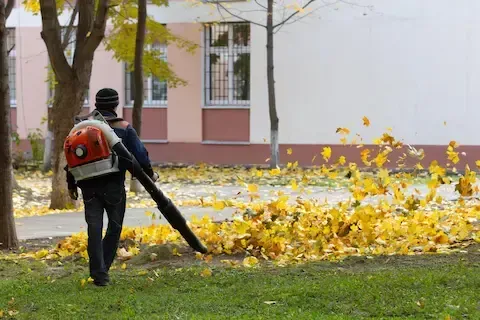
On the technique side, backpack blowers work best for clearing beds, borders, and tight areas near foundations. For open lawn areas, a combination of blowing to windrows and then vacuuming or bagging with a mower deck is the most efficient approach. Mulching leaves directly into the turf is an option on light to moderate leaf loads — the shredded organic matter can benefit soil — but heavy layers need to come off entirely. Thick leaf mats left on grass through winter will cause bare patches and disease pressure that you'll be repairing all of next spring.
Lawn Winterization: Fertilizer, Aeration, and Final Cuts
A proper Fall Cleanup goes beyond leaf removal. Lawn winterization is the component that separates properties that green up cleanly in April from those that look ragged and patchy. Here's what should happen to Hartford lawns before the ground freezes:
- Final fertilizer application: A winterizer fertilizer high in potassium should go down in late October or early November. This feeds root systems that continue developing even after top growth stops, improving winter hardiness and early spring green-up.
- Core aeration: If you haven't aerated in a year or two, fall is the best time. Core aeration in the September to October window relieves compaction, improves drainage, and allows fertilizer and overseeded material to reach the root zone.
- Overseeding bare areas: Thin or bare spots should be overseeded no later than mid-September to allow establishment before cold arrives. By the time you're into full fall cleanup mode in October, overseeding windows are largely closed for cool-season grasses.
- Final mowing height: Drop your mowing height gradually over the last few cuts of the season, finishing at around 2.5 inches. Turf that goes into winter too long is more susceptible to snow mold. Too short and it loses the root mass it needs for winter resilience.
Gutter and Drainage Clearing
Hartford's fall leaf volume makes gutter clearing non-negotiable. Clogged gutters during November and December rain events can cause overflow that saturates foundation soils, and when temperatures drop, that standing water in clogged gutters becomes ice that damages fascia boards and creates dangerous ice dam conditions. The best timing for gutter cleaning in Hartford is after the second leaf drop — usually mid to late November — so you're clearing out the season's full leaf load in one visit.
Beyond gutters, walk the property and check catch basins, French drains, and any surface drainage channels. Leaf debris accumulates quickly in these systems, and a blocked drain during a November rain can mean standing water that freezes in place and damages hardscape. Storm drains along Hartford streets are also a shared concern — keeping the street edge in front of your property clear of leaf debris keeps water moving toward storm infrastructure properly.
Garden Beds, Perennials, and Landscape Prep
Bed preparation is the part of fall cleanup that directly determines how much work you're doing in spring. In Hartford's climate, perennials that are cut back in fall clean up easily in spring, and leaving certain stems standing through winter provides wildlife habitat and winter interest — but there's a practical balance to strike.
- Cut back dead annuals and pull them from beds entirely. Leaving dead plant material in beds over winter can harbor disease and pest overwintering sites.
- Cut perennials back by half to two-thirds, but leave a few inches of stem above the crown so you can locate them come spring. Hostas, daylilies, and black-eyed Susans can all be cut back fully once frost has killed the foliage.
- Apply a two- to three-inch layer of mulch to beds after the ground has begun to cool but before it freezes hard. This is usually mid-November in Hartford. Mulching too early keeps soil warm, which can encourage disease. Mulching at the right time moderates freeze-thaw cycles that heave plant crowns out of the ground.
- Pull up annuals, clean out vegetable beds, and turn any remaining organic matter into the soil or compost pile.
Equipment Storage and Winter Readiness
Lawn equipment that goes into storage without proper preparation in fall is equipment that fails to start in spring. This step gets skipped more than any other on the checklist, and it's the one that creates a scramble in March when you need the mower and it won't turn over.
For gasoline-powered mowers, blowers, and trimmers, run the fuel tank as close to empty as possible at end of season, or add a quality fuel stabilizer if you're storing with fuel in the tank. Drain the oil and replace it before storage if you're due for a change. Clean the underside of the mower deck to remove caked grass and debris that corrodes metal over winter. Sharpen or replace blades before storing — a sharp blade ready to go in spring is more efficient than trying to schedule sharpening when you urgently need to mow.
Irrigation systems serving Hartford properties need to be blown out before freezing temperatures arrive. Even partially winterized systems can retain water in low points of the pipe, and that water expands when frozen, cracking PVC lines and fittings. A professional blowout with a high-volume air compressor is the standard approach, and this should happen in October before the first hard freeze.
Pre-Snow Prep: The Last Steps Before Winter
Once leaves are handled, the lawn is treated, and gutters are clear, there are a few final steps that prepare Hartford properties specifically for the snow season ahead. Anyone familiar with a post storm walkthrough knows that properties that weren't prepped properly before snow arrived are the ones with the most post-storm issues.
- Mark driveway and walkway edges: Driveway markers — those orange or reflective stakes — protect lawn edges from snow plow damage. In Hartford neighborhoods where plows run on tight schedules, turf and landscape beds adjacent to paved surfaces take a beating without edge marking. Install markers before the first snowfall, not after.
- Clear and store outdoor furniture and décor: Anything that will be buried under snow or damaged by freeze-thaw cycling should come inside or into covered storage. This includes planters, which can crack if soil freezes inside them.
- Check exterior lighting: Shorter days mean outdoor lighting gets used more. Replace burned-out bulbs and check motion sensors and path lights before you're doing it in the cold and dark of December.
- Inspect walkways and steps for hazard points: Loose pavers, cracked concrete, and deteriorating step edges become serious slip hazards once ice forms. A quick fall inspection lets you make repairs before freeze cycles make them worse.
- Pre-treat areas prone to ice formation: Note spots on your property where ice habitually forms — at the base of downspouts, on north-facing steps, on shaded pavement — and have ice management materials ready before the first event rather than scrambling during one.
Prioritizing the Checklist When Time Is Short
Not every Hartford homeowner has the time to work through a comprehensive fall checklist in sequence. If you need to triage, here is the order of priority based on what creates the most lasting damage if skipped:
- Leaf removal from turf before they mat and smother grass
- Gutter clearing before November rain events
- Irrigation blowout before first hard freeze
- Winterizer fertilizer application
- Driveway edge marking before first snowfall
- Equipment storage and preparation
- Bed prep and mulching
The tasks at the top of that list have firm deadlines driven by weather. The ones further down have more flexibility, but all of them affect how much remedial work you're doing when spring arrives. Hartford's spring season is short too — the sooner you're past cleanup and into active growing season maintenance, the better your property performs all year.
