Post Storm Property Damage Walkthrough Hartford CT
A post storm property damage walkthrough in Hartford, CT means systematically checking your yard, roof edges, gutters, fencing, and drainage within 24 hours of a storm. Start at the street and move toward the house, working in a consistent pattern so nothing gets missed. Look for downed branches, displaced mulch, fence lean, clogged drains, and lawn rutting from debris or runoff. Document everything with photos before touching anything. Hartford's mix of mature tree canopy and older infrastructure means storm damage here tends to be layered and easy to underestimate in a single pass.
Step 1: Walk the Perimeter Before Entering the Yard
Stand at the street or sidewalk and scan the full property line before stepping into the yard. Look for large branches resting on fences, utility lines, or the roof edge. In Hartford neighborhoods like West End and Blue Hills, mature oaks and maples shed heavy limbs during wind events, and those limbs are not always where you expect them to land. Note anything that appears unstable before getting close. This outer scan takes two minutes and prevents injury from shifting debris when you start moving things.
Step 2: Check Gutters, Downspouts, and Roof Edges
Gutters clog fast during a storm. Leaf matter, seed pods, and shingle granules pack into downspout openings and create overflow that saturates foundation soil. Walk along the roofline and look for gutter sag, separated sections, or visible debris overflow marks on siding. Check where downspouts discharge and confirm the path is clear. Hartford receives an average of 46 inches of precipitation annually, so a blocked downspout after a storm is not a minor issue — it directs water directly toward your foundation.
Step 3: Assess Tree Limbs, Stumps, and Canopy Damage
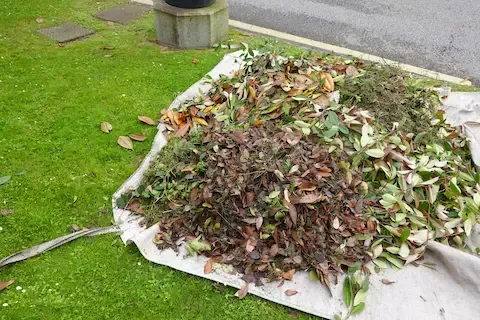
Look up as much as you look down. Hanging limbs — called widow-makers — are a serious hazard that can fall hours or days after the initial storm. If a large branch is lodged in a tree canopy above a walk path, driveway, or play area, treat that zone as off-limits until it is cleared by a professional. For Debris Cleanup of smaller downed material — sticks, bark strips, broken shrub branches — you can begin collecting and piling away from structures once the overhead is confirmed clear.
Step 4: Inspect Fencing for Lean, Damage, and Post Movement
Fences take directional stress during wind and often show damage that looks minor until you push on a post. Check each section of fence by placing a hand on the top rail and applying light lateral pressure. If a post rocks, it has likely lost its footing anchor, either from soil saturation or root intrusion loosening the base. Document any leaning sections with photos from both sides before attempting to straighten. In older Hartford neighborhoods, fence posts set in degraded concrete are particularly vulnerable after ground saturation from heavy rain.
Step 5: Look for Lawn Rutting and Soil Displacement
Runoff during a storm can carve shallow channels across lawn areas, especially on any slope. These ruts look minor at first but compact under foot traffic and become permanent depressions if not addressed in the first week. Walk across the full lawn slowly and feel for soft spots where saturation is deep. Areas near downspout discharge points, street-side swales, and low corners of the lot are most likely to show rutting or pooling. Flag those areas with stakes or marking flags so they are not driven over before they drain and firm up.
Step 6: Document and Prioritize Before Calling Anyone
Complete the full walkthrough before making calls or starting any removal. Take photos of every issue from two angles — a close shot showing the damage and a wider shot showing where it sits relative to the structure. This documentation matters for insurance claims, contractor estimates, and your own records. Prioritize your list into three groups: immediate safety hazards, functional damage affecting drainage or access, and cosmetic or landscape issues that can wait. For the third group, resources like year round debris cleanup can help you plan ongoing removal once the urgent items are handled.
Step 7: Check Drainage Paths and Street-Side Swales
The final check is drainage. Walk the full path that water takes off your property — from the lawn edge, along any grading, through swales, and toward the street or storm drain. Leaf and twig debris frequently blocks these paths during storms, and when water cannot exit the property, it backs up toward foundations and low-access crawl spaces. Clear any visible blockage from swales and confirm the street-side drain opening is not packed with storm debris. Hartford's older residential grid relies heavily on surface drainage, so keeping these paths open after every storm event is a maintenance habit worth building.
