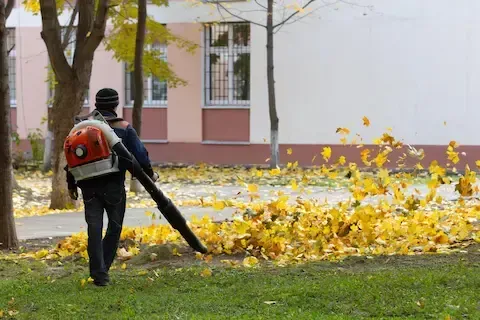
Leaf Removal Schedule for Hartford CT Hardwood Yards
If your Hartford yard is shaded by red oaks, sugar maples, or silver maples, you already know that a single end-of-season cleanup simply does not work. Hardwood canopies drop leaves in stages, and if you wait until every last leaf has fallen, you are dealing with a compacted, wet mat that smothers turf and takes significantly longer to clear. A scheduled approach — timed around how Hartford's hardwood trees actually behave — protects your lawn and keeps the work manageable from mid-October through early November.
Why Hartford Hardwood Trees Demand a Phased Schedule
Hartford sits in USDA Hardiness Zone 6b, and the mix of tree species across neighborhoods like Blue Hills, Asylum Hill, and West End means leaf drop is rarely uniform. Sugar maples tend to shed their canopy quickly in early to mid-October after the first cold nights. Red oaks, on the other hand, are notoriously slow — they can hold leaves well into November and occasionally into early December. Silver maples fall somewhere in between, often dropping in waves after wind events.
When you layer these different timelines across a single yard, the result is a rolling cleanup window that spans roughly six weeks. Trying to condense that into one weekend job at the end of October means you are raking over oak leaves that have not fallen yet, and you are leaving the early maple drop on the ground long enough to kill grass underneath.
A Week-by-Week Schedule That Works for Hartford Yards
The following schedule is built around typical Hartford fall conditions. An early frost or a strong nor'easter can shift these windows by a week in either direction, so treat this as a framework rather than a fixed calendar.
Mid-October: First Pass Under Maples
By the second or third week of October, sugar maples and red maples in Hartford yards have typically shed 60 to 80 percent of their canopy. This is your first pass. Focus on clearing the bulk of the maple drop before it gets rained on and compresses against the turf. A backpack blower works well for moving leaves from beds and tight fence lines out to open lawn areas where they can be collected or mulch-mowed in place. If your mower can handle the volume, mulching this first pass directly into the lawn returns nutrients and eliminates bagging entirely.
Late October: Mid-Season Cleanup
Between October 22nd and October 31st, a second full cleanup pass handles the trailing maple leaves, the early silver maple drop, and any significant accumulation from wind events. This pass is often the heaviest of the season in terms of volume. Yards along streets lined with mature trees — a common feature in Hartford's older residential neighborhoods — can accumulate additional leaves blown in from neighbors' properties. Plan for extra time during this window, especially if the weather has been wet.
Early November: Oak Canopy Clearance
Red oaks hold their leaves the longest, and a dedicated pass between November 1st and November 15th handles the bulk of the oak drop. By this point, your turf is still green underneath in most years, but soil temperatures are dropping fast. Getting the oak leaves cleared before the first hard freeze protects the grass from the smothering effect that mat-forming leaves create when they freeze in place.
Final Pass: Mid-November
A final light cleanup around November 10th to 20th catches any remaining stragglers and prepares the lawn for dormancy. This pass is typically faster than the earlier ones since most of the canopy is down. It also gives you the opportunity to address any areas where leaves have blown into garden beds or settled along foundation plantings.
Practical Considerations for Hartford Fall Conditions
Hartford's autumn weather is unpredictable. A dry October followed by a wet November is common, and it changes how you should approach each cleanup pass. Wet leaves are heavier, harder to blow, and more likely to mat. When conditions are dry, mulch-mowing is faster and adds organic matter to the soil. When leaves are wet, bagging or tarping and hauling is often more practical than trying to shred them in place.
City of Hartford yard waste collection runs on a scheduled basis in the fall, so knowing your pickup dates matters. Bagged or curbside leaf piles need to be out in advance of the collection route. If you miss a pickup, the leaves sit for another week or longer, which defeats the purpose of staying on schedule.
For the Fall Cleanup work itself, equipment selection makes a meaningful difference. A backpack blower handles leaves around beds, against fences, and along the foundation. A dedicated leaf vacuum or high-powered mower bag attachment is worth using when volume is high. Hand raking is effective for smaller areas and finish work but becomes impractical on larger hardwood lots with multiple cleanup passes.
Common Mistakes Hartford Homeowners Make With Leaf Removal
The most frequent mistake is waiting for full leaf drop before starting. By the time every oak leaf has come down, the early maple drop may have been sitting on your lawn for three to four weeks. That is long enough to cause turf damage in mild, moist conditions — the kind Hartford often sees in October and early November.
Another common error is skipping the mulch-mowing option. Many homeowners assume all leaves need to be physically removed from the property, but for moderate accumulations during early passes, mulching them in place with a sharp mower blade is faster, free, and actually beneficial to the lawn.
Finally, neglecting leaf accumulation in garden beds leads to slug and disease pressure the following spring. Clearing leaves from planted areas during each cleanup pass, not just from the open lawn, is part of a complete fall maintenance routine. You can also reference our fall cleanup checklist to make sure no area of your yard gets overlooked between now and the first hard freeze.
Closing Perspective
A realistic leaf removal schedule for a Hartford hardwood yard involves three to four passes spread across six weeks, not a single end-of-season effort. Timing each pass around how your specific trees drop — maples first, oaks last — keeps your lawn protected, your workload manageable, and your yard looking sharp through November. If your property has a heavy canopy or you are working with limited time, starting early and staying consistent is the most practical approach available.
