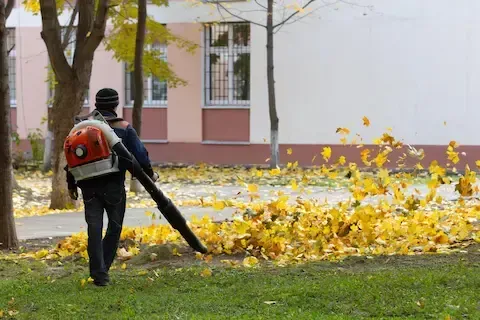
Gutter and Downspout Cleanup for Hartford CT Homes
Clearing gutters and downspouts before Hartford's first hard freeze is one of the most important fall maintenance tasks for local homeowners. Leaves, pine needles, and seed pods accumulate through October and early November, blocking water flow and creating conditions for ice dams once temperatures drop below freezing. Ice dams force water under roofing materials and into wall cavities, causing expensive structural damage. Most Hartford homes need gutter cleaning completed by late November to stay ahead of freezing temperatures. The process takes a few hours and requires basic tools, a stable ladder, and attention to downspout drainage at ground level.
Step 1: Gather Your Tools and Set Up Safely
Before climbing any ladder, collect everything you need so you are not reaching or repositioning unnecessarily. You will need a stable extension ladder with standoff stabilizers to keep it away from the gutter lip, work gloves, a bucket or tarp for debris, a garden trowel or gutter scoop, and a garden hose with a spray nozzle. Hartford homes built before 1980 often have older aluminum gutters that dent easily, so avoid resting your weight or ladder directly on the gutter channel. Set up on firm, level ground and have someone spot the ladder base if possible. Never work on wet or icy surfaces — once late November arrives in Hartford, morning frost makes ladder work genuinely dangerous.
Step 2: Remove Debris From the Gutter Channel
Start at the end of the gutter farthest from the downspout and work toward it. Scoop out wet leaf packs, seedpods, and compacted debris by hand or with a plastic gutter scoop, dropping material into your bucket or onto a tarp below. Do not push debris toward the downspout opening — compacted material at the downspout inlet is the single most common cause of blockages. Hartford's tree canopy is dense with oak, maple, and elm, and late-season leaf drop often leaves gutter channels packed two to three inches deep by the time temperatures fall. Check also for granule buildup from asphalt shingles, which signals shingle wear and can accelerate future clogs. Our Fall Cleanup service handles this process for homeowners who prefer professional results before the freeze window closes.
Step 3: Flush the Gutters With Water
After removing solid debris, use your garden hose to flush each gutter section from the high end toward the downspout. Watch the water flow rate — it should move freely and exit the downspout without backing up. Standing water or slow drainage points to a partial blockage deeper in the channel or at the downspout elbow. If water pools in the center of a gutter run, the section may have lost its pitch, which is common on Hartford homes after years of freeze-thaw cycles shifting fascia boards. A properly pitched gutter drops roughly one quarter inch for every ten feet of run. This step also shows you where any seam leaks or joint separations exist that need caulking before winter.
Step 4: Clear and Test Each Downspout
Downspouts clog most often at the top inlet, the first elbow below the gutter, and the bottom elbow near the foundation. With the hose running at full pressure, direct water into the top of each downspout and listen for normal flow versus hollow gurgling, which indicates a blockage. If the downspout is blocked, insert the hose farther into the pipe and increase pressure, or use a plumber's auger for stubborn compacted debris. Hartford's freeze-thaw cycles expand trapped water inside downspouts, eventually cracking seams, so fully clearing them before December is critical. Confirm that downspout extensions direct water at least four to six feet from your foundation — Hartford's clay-heavy soils drain slowly and allow water to migrate toward basement walls.
Step 5: Inspect Gutters for Winter Damage Risk
Once gutters are clean and flushed, walk the perimeter of your home and check for visible issues that could worsen under ice and snow loads. Look for sections pulling away from the fascia, loose or missing hanger spikes, and gaps at end caps or seam joints. On Hartford homes with older spike-and-ferrule systems, spikes work loose over time and leave the gutter sagging. Replace loose spikes with gutter screws, which hold more reliably through temperature cycling. Check that end caps are sealed and that no gaps exist where water can drip behind the gutter and saturate the fascia board. For a broader view of autumn property tasks beyond the gutters, the fall cleanup checklist covers lawn, bed, and landscape preparation in one organized reference.
Step 6: Schedule a Second Check After Peak Leaf Drop
A single cleaning in early October is rarely enough for Hartford properties surrounded by mature deciduous trees. Oak trees in particular hold leaves well into November, depositing another full layer of debris after an early cleanup. Plan for a second pass in mid to late November, after the majority of leaves have fallen but before overnight temperatures consistently drop below 28°F. That temperature threshold is when standing water in gutters begins freezing into the ice masses that cause dam formation. If your schedule does not allow two cleanings, prioritize the second one over the first — cleaning after peak drop does more to prevent winter damage than an early cleaning alone.
