Lawn Edging Techniques for Hartford CT Brick Walkways
Edging brick walkways in Hartford, CT requires a shallow blade depth of no more than one inch, a consistent angle held parallel to the brick face, and careful passes that avoid disturbing mortar joints. Set your edger to cut just deep enough to sever grass runners without undercutting the brick base. Work in short overlapping passes, especially around older brick paths in neighborhoods like West End or Blue Hills where settled bricks sit at uneven heights. Weekly maintenance prevents grass creep from widening the gap and forcing more aggressive correction later.
What Blade Depth Should You Use Near Brick?
Keep your rotary edger or half-moon blade set to a maximum depth of one inch when working along brick walkways. Brick paths in Hartford neighborhoods often rest on sand or compacted gravel bases that shift over time, particularly through freeze-thaw cycles common to Connecticut winters. Cutting too deep risks undercutting that base layer, which destabilizes individual bricks and creates trip hazards. If you notice the soil is especially loose or the bricks rock slightly underfoot, reduce your blade depth to half an inch and make two lighter passes rather than one aggressive cut.
How Do You Hold the Edger Angle Correctly?
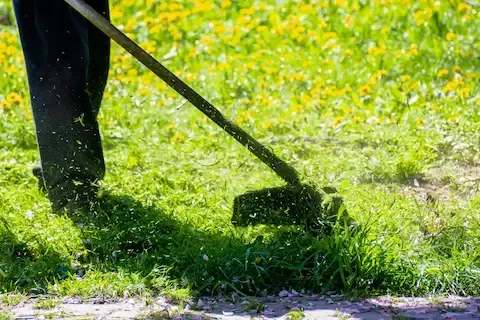
Hold the blade at a vertical or near-vertical angle, keeping the cutting edge parallel to the brick face rather than angled away from it. A common mistake is letting the blade lean outward, which undercuts the turf side unevenly and leaves a sloped trench that collects debris. For curved brick paths, common in older Hartford properties in the Asylum Hill and Parkville areas, pivot slowly through the arc while keeping consistent blade-to-brick contact. If you are using a string trimmer for edging instead of a dedicated edger, hold the head so the string spins against the grass side only, never against the mortar joints.
What Precautions Protect Mortar Joints?
Mortar joints between bricks are the most vulnerable point during edging. Aging mortar, especially on walkways installed before the 1990s, can be brittle and chip easily when struck by a spinning blade or metal edger wheel. Before you begin, walk the entire length of the walkway and press lightly on bricks to identify any that shift. Mark those sections with a small flag or chalk and reduce your tool speed when you reach them. For our Edging And Trimming service, we inspect mortar condition before starting on any older Hartford property to avoid accelerating joint deterioration.
How Often Should You Edge Along Brick Walkways?
Edge once per week during the active growing season, which in Hartford runs from mid-April through mid-October. Grass varieties common to Connecticut lawns, including Kentucky bluegrass and tall fescue, send out lateral runners that can bridge the gap between turf and brick within seven to ten days under warm, moist conditions. Letting the interval stretch to two or three weeks allows those runners to root into the joint spaces, requiring more forceful removal that risks damaging the brick edge. A consistent weekly pass takes only a few minutes and keeps the line clean without deep correction.
What Tools Work Best for Brick Walkway Edging?
A half-moon manual edger works well for short, straight runs and gives you maximum control over depth and angle. For longer walkways, a corded or battery-powered rotary edger with an adjustable depth wheel provides consistent results without fatigue. Avoid using a flat spade as your primary edging tool along brick because the wider blade makes depth control difficult and increases the risk of catching a brick corner. A narrow border spade is acceptable for touch-up work in tight corners where a rotary edger cannot reach. Keep blades sharp because dull tools tear grass rather than cut it cleanly, leaving ragged edges that brown and look untidy within days.
How Do You Handle Uneven Brick Surfaces?
Uneven brick surfaces require you to lift the edger slightly at each raised joint rather than maintaining a constant glide. Before running the tool, use a broom to sweep loose debris from the brick edge so you can see the actual brick profile clearly. On walkways where frost heave has pushed certain bricks up by a quarter inch or more, which is common along shaded paths in Hartford's Frog Hollow and South Green neighborhoods, work in shorter segments of two to three feet and reset your stance between each segment. This prevents the tool from riding up onto a raised brick and bouncing into the turf at an unintended angle.
What Cleanup Steps Should You Follow After Edging?
After edging, use a blower or stiff push broom to clear all clippings and soil debris off the brick surface. Wet debris sitting on brick promotes moss and algae growth, which becomes slippery and accelerates mortar degradation over time. Blow clippings onto the turf side and then collect them with a mower pass or rake rather than leaving them to mat down against the brick face. Check the cut line visually from a low angle to confirm the edge is consistent and no grass runners remain bridging the gap. If sections look uneven, a quick pass with a manual half-moon edger corrects small inconsistencies before they become established growth. For background on how edging and trimming work fits into a complete lawn care routine, that resource covers scheduling and tool selection in more depth.
