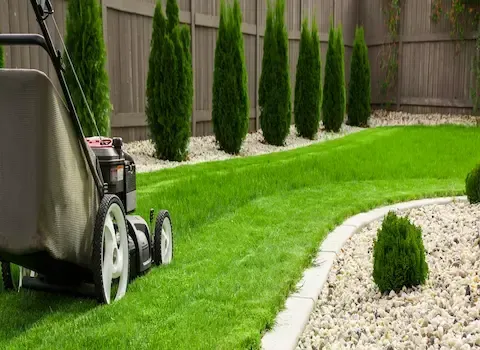
Mowing Height Standard for Hartford CT Clay Soil Lawns
Hartford lawns sit on some of the most demanding soil in New England. The Connecticut River Valley's heavy clay holds moisture for extended periods, drains slowly after rain, and bakes into a hard surface during summer dry spells. That combination puts grass under stress that loose, sandy soils never create. Mowing height is one of the most direct controls you have over how well your lawn survives those conditions, and getting it right for clay soil is a different calculation than the standard advice you'll find on a bag of seed.
Why Clay Soil Changes the Mowing Equation
On well-drained sandy or loam soil, cutting grass short encourages density and looks neat without much consequence. Clay soil behaves differently. When turf is cut too short over clay, several problems stack up quickly. The exposed soil surface heats up under direct sun, triggering drought stress even when the clay beneath still holds residual moisture. Short grass also means shallower roots. On clay, roots already struggle to penetrate compacted layers, and a closely mowed canopy reduces the photosynthetic output that drives deep root growth. The result is a lawn that looks maintained but is actually becoming weaker with every pass of the mower.
Hartford's summers bring stretches of heat and humidity that push cool-season grasses toward dormancy. Tall fescue and Kentucky bluegrass, the two species most common in Hartford residential lawns, are cool-season grasses that slow their growth when soil temperatures exceed 85 degrees Fahrenheit. Over clay, those soil temperatures spike faster and hold longer than over lighter soils. Keeping grass at the right height is one of the few practical ways to buffer that heat load without irrigation.
The Right Mowing Height for Hartford Clay Lawns
For clay soil lawns in the Hartford area, mowing height should be set between three inches and three and a half inches throughout the growing season. That range is not a suggestion — it is the practical threshold where the benefits become measurable. At three inches, grass blades provide enough canopy coverage to shade the soil surface, reducing evaporation and keeping root zone temperatures lower during peak summer heat. At three and a half inches, you add meaningful insurance against crabgrass germination. Crabgrass seeds require direct sunlight on warm soil to germinate. A dense, taller canopy blocks that light effectively.
Tall fescue tolerates and actually performs better at the higher end of this range. If your Hartford lawn is predominantly tall fescue, aim for three and a half inches from late May through August. Kentucky bluegrass can be kept closer to three inches without the same penalty, though raising it slightly during July and August still reduces heat stress on clay. If you are unsure which grass you have, take a blade to any local garden center — Hartford has several within the city and in West Hartford and Wethersfield that can identify grass type in under a minute.
Seasonal Adjustments on Clay Soil
Clay soil does not behave the same in April as it does in August. Spring mowing on wet Hartford clay creates compaction risk. Mower wheels sink slightly into saturated clay and create surface depressions that hold water and eventually develop into thin spots. Starting the season at two and a half inches for the first one or two cuts allows you to mow when the ground is still slightly damp without the same compaction damage. As soil firms up through May, raise the deck to three inches and leave it there until fall.
In September and October, some homeowners drop mowing height back down in preparation for winter. On clay soil in Hartford, this is unnecessary and can be counterproductive. Grass entering dormancy with adequate leaf tissue stores more carbohydrate energy in its crown. That reserve supports faster green-up the following spring. The only time a lower fall cut makes sense is if you are overseeding bare patches and need good seed-to-soil contact, in which case a single cut at two and a half inches before seeding is acceptable.
The One-Third Rule on Compacted Ground
The standard one-third rule — never remove more than one-third of the blade in a single mowing — matters more on clay soil than on any other type. When you remove too much blade at once, the grass redirects energy from roots to leaf recovery. On clay soil with already restricted root development, that energy diversion is far more damaging than on loose soil where roots are deep and robust. If you fall behind on mowing during a rainy Hartford spring and grass reaches five or six inches, raise the deck fully and take it down in two passes spaced three to four days apart rather than cutting it hard in a single session.
This is one reason Lawn Mowing on a consistent schedule matters more in clay soil neighborhoods like Blue Hills, Asylum Hill, and Parkville than it might elsewhere. Missing a week in June on clay can mean two weeks of corrective management to get the lawn back to a healthy state.
Blade Sharpness and Clay Soil
Dull mower blades tear grass rather than cut it. On any soil, torn tips turn brown and increase disease vulnerability. On clay soil, the consequence compounds because clay-heavy lawns are already prone to fungal diseases like brown patch and dollar spot during Hartford's humid summers. Torn tips create the exact entry points those pathogens exploit. Sharpen blades at minimum twice per season — once at the start and once in mid-July. If you mow more than half an acre, a third sharpening in early September before fall growth flushes is worth the time.
Clipping Management on Clay
Leaving clippings on the lawn when you follow the one-third rule returns nitrogen to the soil without matting. On clay soil, clipping management becomes more important during wet periods. Thick clumps of wet clippings sitting on the surface of clay-heavy Hartford lawns can smother grass and create conditions for surface fungal growth. If rain is forecast within 24 hours of mowing or if the lawn was damp when cut, either collect clippings or run a second pass with the mower to disperse them before they mat down.
For broader context on maintaining a healthy lawn through every season, the guide on year round lawn mowing covers how consistent scheduling interacts with Hartford's climate across all four seasons.
Practical Setup Before the Season Starts
Check your mower deck height at the start of each season with a tape measure rather than relying on the deck setting dial. Deck dials vary by machine and wear over time. Place the mower on a flat driveway surface and measure from the ground to the blade at its lowest point. Adjust until that measurement sits at three to three and a half inches. Mark the dial position with a paint pen so you can return to it accurately after any adjustment. Hartford homeowners who take that five-minute step at the start of the season avoid the most common source of accidental scalping on clay lawns.
How short you cut ties directly to how often you should mow. Our post on how often to mow a Hartford lawn walks through the schedule.
