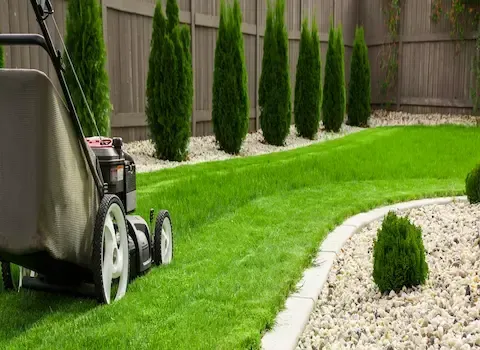
Drought Mowing Strategy for Hartford CT Cool Season Grass
During a Hartford drought, raise your mower deck to 3.5–4 inches, mow less frequently, and always leave clippings on the lawn. Cool season grasses like tall fescue and Kentucky bluegrass go semi-dormant under heat stress. Cutting them too short removes the leaf canopy that shades roots and slows moisture loss. The goal is to reduce stress, not maintain a perfect appearance. Water deeply once per week rather than lightly every day. These adjustments protect root systems through Connecticut's dry summer stretches and help your lawn recover faster once rain returns.
Step 1: Raise Your Mower Deck to 3.5–4 Inches
This is the single most important adjustment you can make. In Hartford summers, cool season grasses are already working against heat that exceeds their comfort zone. Taller grass blades shade the soil surface, reduce ground temperature, and slow evaporation. Set your mower deck to at least 3.5 inches. If your lawn shows visible stress or browning, go to 4 inches. Never remove more than one-third of the blade length in a single pass. If the grass has grown tall between cuts, raise the deck first and bring the height down gradually over two or three mowings rather than scalping it in one session.
Step 2: Extend Your Mowing Interval
Drought-stressed grass grows much more slowly than healthy grass. During a dry stretch in Hartford or surrounding towns like West Hartford and Newington, you may find your lawn only needs cutting every ten to fourteen days rather than weekly. Mowing too often on stressed turf creates repeated wounding that the grass cannot heal efficiently without adequate moisture. Watch the actual growth rather than following a rigid schedule. If the lawn hasn't grown enough to require a cut, skip the mow. Forcing a schedule during drought does more harm than good and puts unnecessary wear on root systems already struggling to pull water from dry soil.
Step 3: Leave Grass Clippings on the Lawn
Grass clippings decompose quickly and return nitrogen and moisture directly back to the soil surface. During drought conditions, this is free, immediate mulching. Clippings from a properly timed cut, where you remove no more than one-third of the blade at once, are short enough that they settle between the remaining grass blades without matting. Matting only occurs when too much is cut at once or when clippings are left in thick clumps. If you do end up with clumps after a longer interval, spread them lightly with a rake rather than bagging and removing them. Removing clippings during drought removes both organic matter and moisture the lawn needs.
Step 4: Mow at the Right Time of Day
Avoid mowing in the midday heat. In Hartford, summer temperatures regularly climb into the upper 80s and beyond, and mowing at peak heat adds mechanical stress on top of thermal stress. Early morning is ideal because dew has dried but temperatures are still moderate. Late afternoon is a reasonable second choice. Mowing in full midday sun causes immediate moisture loss from the cut blades and stresses both the operator and the turf. Morning mowing also gives cut surfaces several hours to begin healing before overnight temperature drops, which matters for disease prevention in Connecticut's humid climate.
Step 5: Keep Mower Blades Sharp
Dull blades tear grass rather than cutting it cleanly. Torn tissue loses moisture faster and creates ragged edges that turn brown within a day or two. This damage is cosmetically noticeable but more importantly it stresses the plant at a time when it has limited resources to repair itself. During drought season, inspect your mower blade before each use or at minimum every other mow. A sharp blade makes a clean cut that allows the grass to seal quickly and redirect energy into root maintenance rather than wound recovery. If you are using a Lawn Mowing service, confirm that the crew sharpens blades regularly as part of their maintenance routine.
Step 6: Water Deeply Once Per Week Rather Than Lightly Every Day
Watering strategy and mowing strategy are connected. Shallow daily watering keeps moisture in the top inch of soil and encourages roots to stay shallow. When that top inch dries out quickly in Hartford's summer heat, shallow-rooted grass wilts fast. Deep weekly watering, roughly one inch at a time, pushes moisture down four to six inches and trains roots to follow it deeper into the soil profile. Deeper roots are dramatically more drought-tolerant. Apply water in the early morning to minimize evaporation. If your town has water restrictions in place, check Hartford Water Department guidance and adjust accordingly. Coordinate your watering day with your mowing schedule so you are not mowing immediately after watering, which compacts wet soil.
Step 7: Recognize When to Stop Mowing Entirely
If your cool season lawn enters full dormancy, which appears as uniform tan or straw coloring across the entire lawn rather than patchy browning, stop mowing. Dormant grass is not dead. Kentucky bluegrass and tall fescue common in Hartford-area lawns can survive four to six weeks of dormancy and recover when temperatures drop and rain returns in late summer or early fall. Mowing dormant grass removes protective leaf tissue and can damage crowns that are the growing point of each plant. For more on maintaining your lawn through seasonal transitions, see our guide on year round lawn mowing. When the lawn breaks dormancy, resume mowing gradually and continue maintaining the elevated deck height until consistent fall rains have restored the lawn's vigor.
